.png)
4 Best Free Learning Resources for Children in the UK (KS1 to GCSE)
You don't need to spend a fortune to support your child's learning at home.
Brilliant free educational resources exist. The trick is knowing which ones are worth your time.
Many parents waste hours searching through websites that promise help but deliver confusing interfaces, outdated content, or activities that don't match what children learn in school.
Here are four free learning resources I recommend. One for each Key Stage. All trusted by teachers and parents across the UK.
Key Stage 1 (Years 1 to 2): PhonicsPlay

PhonicsPlay is the go-to resource for phonics practice at home.
Why it works:
PhonicsPlay offers free, unlimited access to selected games and teaching activities. The games follow the same phonics phases children learn in school, so what they practise at home matches what they're learning in class.
The interface is simple. Children click on a phase, choose a game, and start practising. No complicated navigation. No distracting ads.
Best for:
Short, regular practice sessions (5 to 10 minutes)
Children in Reception, Year 1, and Year 2
Reinforcing letter sounds, blending, and segmenting
Parents who want phonics support but don't know where to start
How to use it:
Ask your child's teacher which phonics phase they're currently learning. Start there. Play one game for 5 minutes after school, three times a week.
Key Stage 2 (Years 3 to 6): Topmarks

Topmarks is one of the easiest free educational websites for parents to use.
Why it works:
The site organises resources by subject and year group. You click on Year 4 Maths, and you see every topic your child is learning. No searching through irrelevant content.
Topmarks excels at times tables, mental maths, and spelling and grammar games. The games are quick, focused, and genuinely helpful for building fluency.
Best for:
Times tables practice (the Hit the Button game is excellent)
Mental maths skills
Spelling and grammar reinforcement
10-minute practice sessions before homework
How to use it:
Pick one weak area. If your child struggles with the 7 times table, play Hit the Button set to 7s for 5 minutes daily. Repetition builds speed and confidence.
Key Stage 3 (Years 7 to 9): BBC Bitesize

BBC Bitesize is the safe "start here" recommendation for Key Stage 3.
Why it works:
BBC Bitesize is free, broad, and covers every subject children study at secondary school. Each topic includes video explanations, written guides, and practice quizzes.
The content matches the national curriculum. What your child learns on BBC Bitesize aligns with what they're taught in school.
Best for:
Children who need a different explanation than what their teacher provided
Quick topic recaps before tests
Subjects where your child feels lost and needs a foundation
Parents who want a trustworthy source for homework help
How to use it:
When your child says "I don't understand photosynthesis," search BBC Bitesize KS3 Science Photosynthesis. Watch the video together. Then have your child complete the quiz.
Key Stage 4 (Years 10 to 11, GCSE): Maths Genie
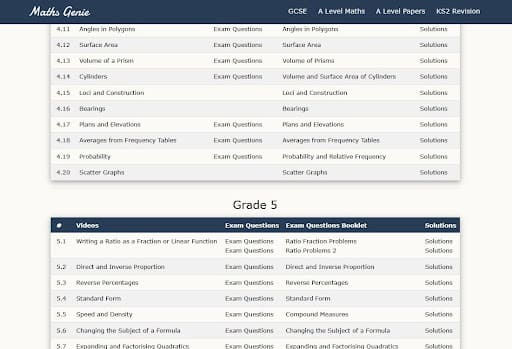
Maths Genie is the free GCSE maths revision resource parents wish they'd found sooner.
Why it works:
Maths Genie offers topic-based videos, notes, exam-style questions, worksheets, and full worked answers. Everything is organised by GCSE topic, making it easy to target weak areas.
The site covers both Foundation and Higher tiers, so it works for all students regardless of their target grade.
Best for:
GCSE maths revision
Filling specific gaps (your child struggles with quadratic equations, go straight to that topic)
Exam practice with worked solutions
Students who need to see multiple examples before concepts click
How to use it:
Identify your child's weak topics from their mock exam or recent assessments. Work through one topic per week: watch the video, complete the worksheet, check answers.
How to Use Free Resources Effectively
Having resources doesn't guarantee progress. How you use them matters.
Keep sessions short. 10 to 15 minutes of focused practice beats an hour of distracted scrolling through content.
Be specific. "Practise maths" is vague. "Complete 10 questions on fractions on Topmarks" is clear.
Make it routine. Same time, same place, same duration. Routine removes resistance.
Check the work. Free resources often provide answers. Sit with your child and review what they got wrong. Understanding mistakes is where real learning happens.
Celebrate effort. "You stuck with that times table practice even though it was tricky," builds motivation.
When Free Resources Aren't Enough
Free resources work well for:
Quick practice and reinforcement
Children who need a different explanation
Building fluency in specific skills
They don't replace:
Personalised feedback on why your child makes specific mistakes
Tailored support that targets your child's exact gaps
One-to-one guidance that builds confidence alongside knowledge
If your child has been using free resources but still struggles, they need more than practice. They need someone to identify why they're stuck and teach in a way that works for them.
That's what we do at Tutoring with Portia. Our online tuition provides personalised support that adapts to your child's learning style, fills their specific gaps, and builds the confidence that free resources alone cannot provide.
Learn more about how our online tuition works here.
Or book a free call to discuss your child's needs.


Comments